


The South African Constitution of 1996 (Constitution) is a single written document embodying the supreme law of the Republic of South Africa. The Constitutional Court of South Africa held in Carmichele v Minister of Safety and Security that the Constitution “is not merely a formal document regulating public power. It also embodies an objective normative value system”. These normative values are contained in section 1 of the Constitution and influence the interpretation of the other provisions of the Constitution, as well as the interpretation of ordinary rules of law.
The Constitution is the product of extensive negotiations between various political parties following the end of the Apartheid era. All-party negotiations were initially convened at the Conference for a Democratic South Africa (CODESA).
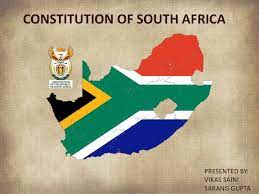
Although negotiations at the CODESA failed, negotiations on the Constitution continued between the African National Congress and the National Party (the Apartheid government). This culminated in a new negotiation forum called the Multi-Party Negotiation Process that saw the agreement of the text of
the interim Constitution and the framework for the final Constitution, which took the form of a set of binding Constitutional Principles.
The final Constitution was drafted and adopted by an elected Constitutional Assembly in conformity with the Constitutional Principles, under which the Constitutional Court subsequently certified the draft of the final constitutional text.
What is the usual cost involved for a seller when selling a property?
The following items will be deducted for the sellers proceeds of sale on registration Current outstanding bond amount Bond cancellation cost Estate